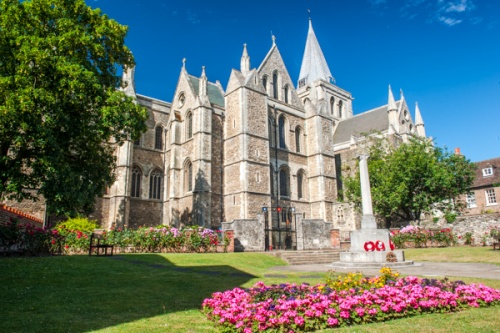
Rochester can claim to be the second-oldest earliest cathedral in England after Canterbury. It was founded by King Ethelbert of Kent in AD 604. The Cathedral was personally consecrated by St Augustine and dedicated to St Andrew, the patron saint of monasteries.
The first Bishop of Rochester was Justus. The original 7th-century Cathedral has long since vanished through centuries of rebuilding, but in 1889 restoration work uncovered the foundations of the original 7th-century building under the west end.
The foundations were about 1.5m (5 feet) deep and what was left of the walls were 70 cms (2' 4") thick. The walls were made of stone and Roman brick. The original Cathedral had a round end named an 'Apse.' The length was about 14 metres (46' 6") and the width was about 8.8 metres (29' 6") When the Normans invaded England in 1066, Gundulf became the Bishop of Rochester in 1077.
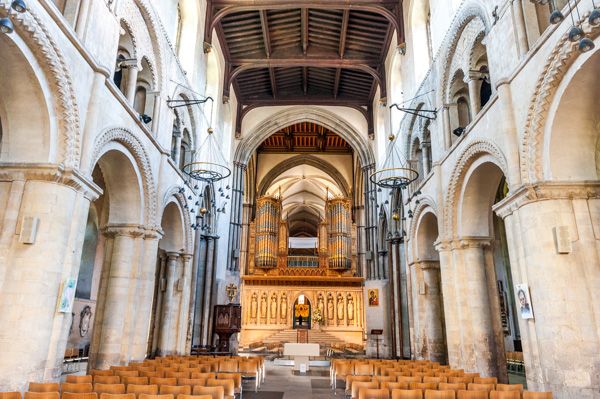
Gundulf built the Castle opposite the Cathedral, and he also built the Tower of London. Gundulf started to design the new Cathedral for Rochester. In 1115, Ernulf was inaugurated as the Bishop of Rochester. In 1137 and 1179, fires engulfed the Cathedral and it was badly damaged. In 1215 the Cathedral was looted, first by King John and then in 1264 by Simon de Monfort's men when they laid siege to the City.
It is traditionally thought that King Henry VIII met Anne of Cleves in the cloisters of Rochester Cathedral. Unfortunately, in the 1800s Rochester had become one of the poorest dioceses in the country. Again it was robbed of its treasures by unruly soldiers.
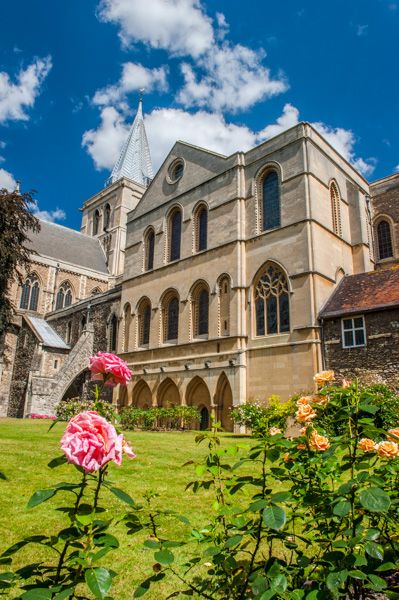
Unbelievably, the Cathedral became a place of ill repute, where often gambling and drinking took place. Samuel Pepys described it as a 'Shabby place.' Through the 1800s, the Cathedral had gone through a number of restoration processes, and finally, in 1880, Gilbert Scott restored the Cathedral to its present-day appearance.
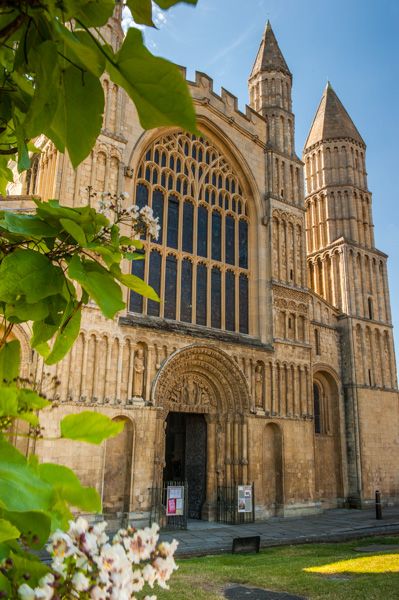
Here's a tip - though the cathedral looks wonderful from any angle, the best view of all is looking down on the west front from the keep of the castle.
More Photos
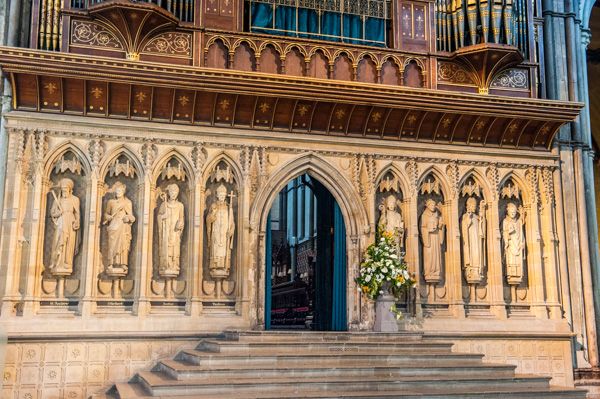
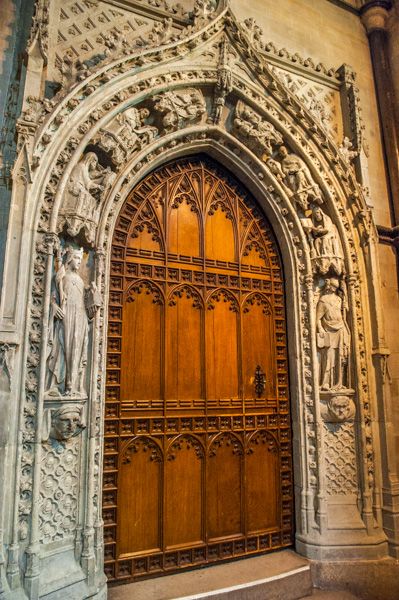
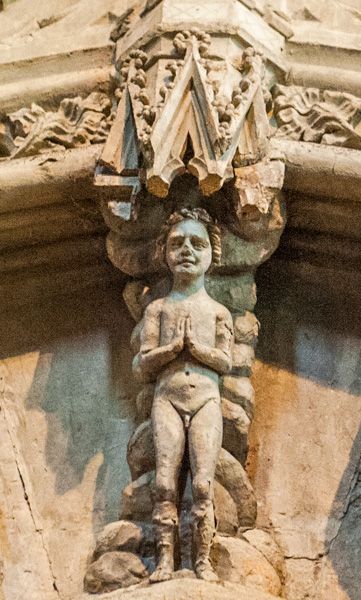
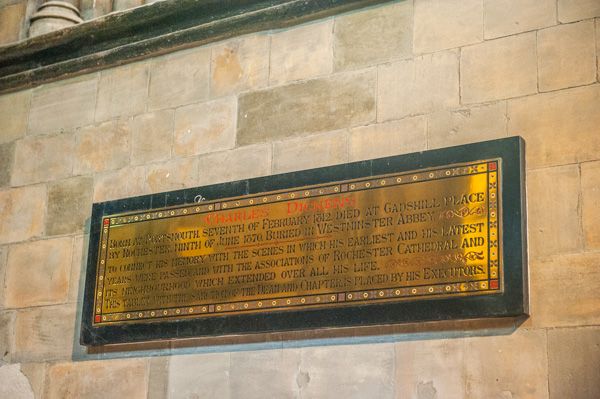
About Rochester Cathedral
Address: Garth House, The Precinct, Rochester,
Kent,
England, ME1 1SX
Attraction Type: Cathedral
Location: access from M2, Junction 3
Website: Rochester Cathedral
Location
map
OS: TQ743 684
Photo Credit: David Ross and Britain Express
HERITAGE
 We've 'tagged' this attraction information to help you find related historic attractions and learn more about major time periods mentioned.
Historic Time Periods:
Find other attractions tagged with:
12th century (Time Period) - 13th century (Time Period) - castle (Architecture) - Gilbert Scott (Person) - Henry VIII (Person) - King John (Person) - Restoration (Historical Reference) - Roman (Time Period) -
NEARBY HISTORIC ATTRACTIONS
Heritage Rated from 1- 5 (low to exceptional) on historic interest
Rochester Castle - 0 miles (Castle) 
Restoration House - 0.1 miles (Historic Building) 
Rochester Guildhall Museum - 0.2 miles (Museum)
Temple Manor - 0.6 miles (Historic Building)
Historic Dockyard Chatham - 1.1 miles (Museum)
Royal Engineers Museum - 1.3 miles (Museum)
Upnor Castle - 1.6 miles (Castle)
Cobham Mausoleum - 3 miles (Historic Building)
Nearest Holiday Cottages to Rochester Cathedral:

Culverstone Green, Kent
Sleeps: 2
Stay from: £380.00 - 1325.00

Sittingbourne, Kent
Sleeps: 2
Stay from: £317.00 - 1291.00

More self catering near Rochester Cathedral