Historic London Buildings
18 Folgate Street - Blewcoat School
An A-Z of historic buildings and other historic attractions in the heart of London. See also historic attractions in the Greater London area, and for more on royal palaces see Royal London.
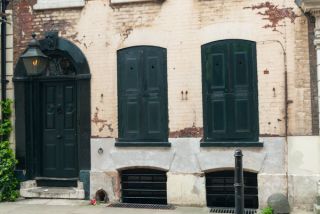
An eccentric and fascinating house made over by artist Dennis Severs to resemble the home of 18th century Flemish weavers. It is as if you, the visitor, have walked through a painting into the home, arriving in the middle of dinner and as you wander from room to room your senses are intrigued by the smells, sights, and sounds of daily life.
Spitalfields,
London,
Greater London,
England, E1 6BX
Heritage Rating: 
Nearest: Self Catering
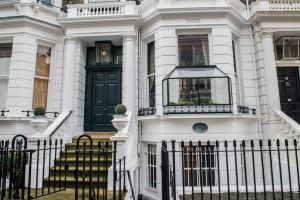
18 Stafford Terrace is a late Victorian townhouse, the former home of cartoonist Edward Linley Sambourne. The interior is remarkably intact, and visitors can trace the history of the house and its inhabitants.
18 Stafford Terrace,
London,
Greater London,
England, W8 7BH
Heritage Rating: 
Nearest: Self Catering
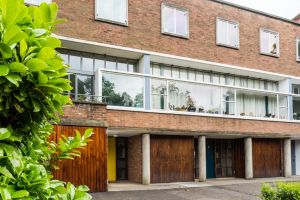
The house at 2 Willow Road in the London suburb of Hampstead is one of Britain's most important examples of Modernist architecture. It is the former home of architect Erno Goldfinger, and was designed and built by him in 1939. The house is also filled with furniture designed by Goldfinger. The art collection includes a number of significant 20th-century works by Bridget Riley, Max Ernst and Henry Moore among others.
2 Willow Road,
London,
Greater London,
England, NW3 1TH
Heritage Rating:
Heritage Highlight: A post-modern architectural tour-de-force
Nearest: Self Catering
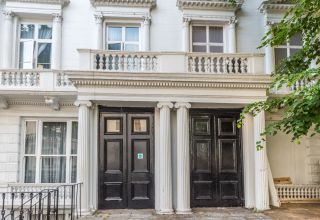
Two terraced houses in an elegant Bayswater street are fakes. These false-fronted houses were built in the 1860s to hide a section of the underground railway track between Paddington and Bayswater, allowing trains to vent steam and smoke into the open air, yet out of sight.
23-24 Leinster Gardens,
London,
Greater London,
England, W2 3BH
Attraction Type: Historic Property - Landmark
Heritage Rating:
Heritage Highlight: London's most famous false-fronted houses
Nearest: Self Catering
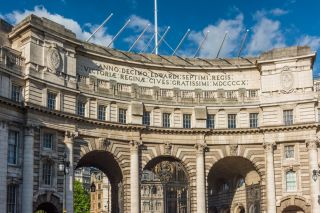
Admiralty Arch is a ceremonial gateway built in 1912 in memory of Queen Victoria and designed by Sir Aston Webb. It stands between Trafalgar Square and The Mall. The arch was built to house naval offices including the official residence of the First Sea Lord.
The Mall,
London,
Greater London,
England, SW1A 2WH
Heritage Rating:
Nearest: Self Catering
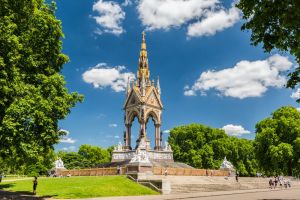
One of London's premier landmarks, the Albert Memorial is a grandiose gilded monument erected by a mourning Queen Victoria in honour of her consort, Prince Albert of Saxe-Coburg-Gotha. The monument stands just within the boundary of Kensington Garden, near the Coalbrookedale Gates onto Kensington High Street. The statue of Prince Albert sits upon a raised pedestal under a canopy, looking towards the Royal Albert Hall and the cultural buildings of South Kensington, a lasting legacy of Albert's pet project, the 1851 Great Exhibition. The monument was designed by Sir George Gilbert Scott, one of the premier architects of the Victorian period.
S Carriage Drive, Kensington Gardens London,
Greater London,
England, SW7 2AP
Heritage Rating: 
Nearest: Self Catering
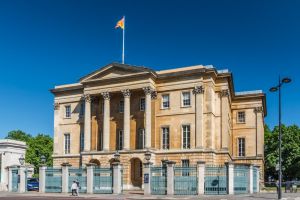
Apsley House is a late 18th-century house in neoclassical style, famous as the London residence of 'The Iron Duke' - the Duke of Wellington. Appsley faces the entrance to Hyde Park, in a position that was originally just outside the Knightsbridge toll gate entrance to the city of London. For that reason, it became known as 'Number One, London' (though there was never any such official designation). The house was built between 1787 and 1787 by master architect Robert Adam, the most prominent exponent of Palladian neoclassical architecture. Apsley is now in the hands of English Heritage.
149 Piccadilly, Hyde Park Corner London,
Greater London,
England, W1J 7NT
Heritage Rating:
Nearest: Self Catering
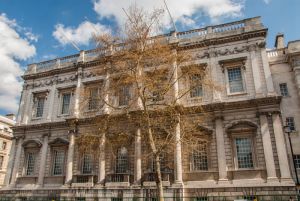
Built by Inigo Jones for James I from 1619, Banqueting House was the only major part of Whitehall palace to survive a devastating fire in 1698. Jones's work was considered to be his masterpiece. In 1649 Charles I was beheaded in front of Banqueting House, stepping to his execution through the large first-floor windows to the scaffold.
Whitehall,
London,
Greater London,
England, SW1A 2ER
Heritage Rating:
Nearest: Self Catering
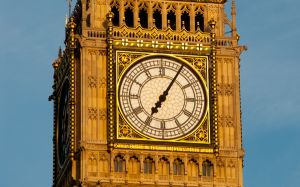
Perhaps the most famous bell in the world, Big Ben is the largest of five bells that hang in the clock tower of the Palace of Westminster (the Houses of Parliament). The bell was cast at Whitechapel Bell foundry and hung in 1858.
Palace of Westminster, House of Commons London,
Greater London,
England, SW1A 0AA
Heritage Rating: 
Heritage Highlight: The hour bell of the Clock Tower of the Houses of Parliament is a true British icon.
Nearest: Self Catering
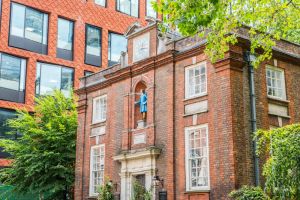
An elegant townhouse of red brick, Blewcoat was built in 1709 by a London brewer to provide education for poor children, Blewcoat remained a school until 1926, and for a time served as the National Trust's main London gift shop.
23 Caxton Street, Westminster London,
Greater London,
England, SW1H 0PY
Heritage Rating:
Nearest: Self Catering