Castles in Yorkshire
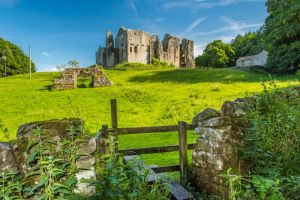
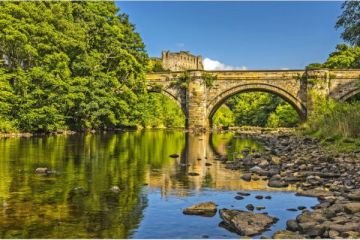
Barden Tower is a 15th-century fortified manor house beside the River Wharfe in the Yorkshire Dales. It was built by Henry Clifford, the 'Shepherd Lord', and restored by his descendent, Lady Anne Clifford. It was left to decay in the late 18th century and is now a romantic, roofless ruin.
B6160, Bolton Abbey, Yorkshire Dales, Yorkshire, England, BD23 6AS
Attraction Type: Castle - Fortified House
Heritage Rating:  ?
?
Nearest Self Catering Cottages

An imposing courtyard castle with rectangular towers, begun in 1379 by Richard le Scrope, Lord Chancellor to Richard II. Mary, Queen of Scots was imprisoned at Bolton Castle, and Parliament besieged it during the Civil War. One of the most complete and impressive medieval castles in England.
Castle Bolton, Yorkshire Dales, Yorkshire, England, DL8 4ET
Heritage Rating:  ?
?
Heritage Highlight: Remarkably complete 14th century rectangular castle
Nearest Self Catering Cottages

Clifford's Tower is a 13th-century tower built by Henry III atop a high mound above the River Ouse. It is the last remnant of York Castle, begun by William the Conqueror in 1068. Take the parapet walk for superb views over the city of York.
Tower Street, York, Yorkshire, England, YO1 9SA
Heritage Rating: ?
Nearest Self Catering Cottages

Conisbrough Castle is an imposing 12th-century fortress said to be the inspiration for Sir Walter Scott's novel Ivanhoe. The castle is set on a natural slope above the Don Valley. In the 11th century, Conisborough was owned by Harold Godwinson, who later became King Harold. The name is a reminder of this royal connection; it is likely a contraction of the Saxon Cyningesburh, or 'King's burh'.
Castle Hill, Conisbrough, Yorkshire, England, DN12 3BU
Heritage Rating: ?
Nearest Self Catering Cottages

The remains of Flamborough Castle stand off Tower Street, immediately west of the village war memorial, on the northwest side of the main Bridlington to Flamborough road in the centre of the village. The name 'castle' may be somewhat misleading; Flamborough Castle was a fortified manor house, built by the powerful Constable family in 1351.
B1255, Flamborough, Yorkshire, England
Heritage Rating: ?
Nearest Self Catering Cottages

Helmsley Castle is an imposing 12th-century castle overlooking the market town of Helmsley, on the southern edge of the North York Moors National Park.
Castlegate, Helmsley, North York Moors, Yorkshire, England, YO62 5AB
Heritage Rating:  ?
?
Heritage Highlight: Impressive late 13th-century barbican gates. Also, former residence of the Duke of Buckingham.
Nearest Self Catering Cottages

Knaresborough Castle stands on a high cliff above the River Nidd. The castle was begun around 1100 and was once a royal residence - and a prison for Richard II. Within the grounds is the Courthouse Museum, retaining its original Tudor furnishings.
Castle Yard, Knaresborough, Yorkshire, England, HG5 8AS
Heritage Rating: ?
Heritage Highlight: King's Tower, once used to imprison Richard II
Nearest Self Catering Cottages

A mighty fortress on a rise of land between the rivers Cover and Ure. In the Middle Ages, Middleham Castle was the power base of the Neville family. After the Battle of Barnet in 1471 the castle was seized by the crown. Middleham was slighted (made unusable) during the English Civil War, and today only the keep and castle walls survive to give an idea of how imposing this great fortress must have been in its heyday.
Castle Hill, Middleham, Yorkshire Dales, Yorkshire, England, DL8 4QG
Heritage Rating: ?
Nearest Self Catering Cottages

Established by William the Conqueror, Pickering is interesting primarily because it has changed so little since it was first built. William's wooden motte and bailey was transformed into stone in the 13th century, but that was pretty much the end of the remodeling. A shell keep tops a high mound, surrounded by an inner and outer ward.
Castlegate, Pickering, North York Moors, Yorkshire, England, YO18 7AX
Heritage Rating: ?
Heritage Highlight: Begun by William the Conqueror
Nearest Self Catering Cottages

A medieval fortress begun around 1070, Pontefract Castle is best known as the place where Richard II died, probably murdered, in 1399. The castle was one of the most important in the north and became a royal fortress in 1399. It was later the home of the powerful John of Gaunt, son of Edward III. The castle housed a royalist garrison in the Civil War and was eventually destroyed by Parliamentarians in 1644. The most impressive aspect of the castle is the multi-lobed donjon.
Castle Chain, Pontefract, Yorkshire, England, WF8 1QH
Heritage Rating: ?
Nearest Self Catering Cottages